How it works
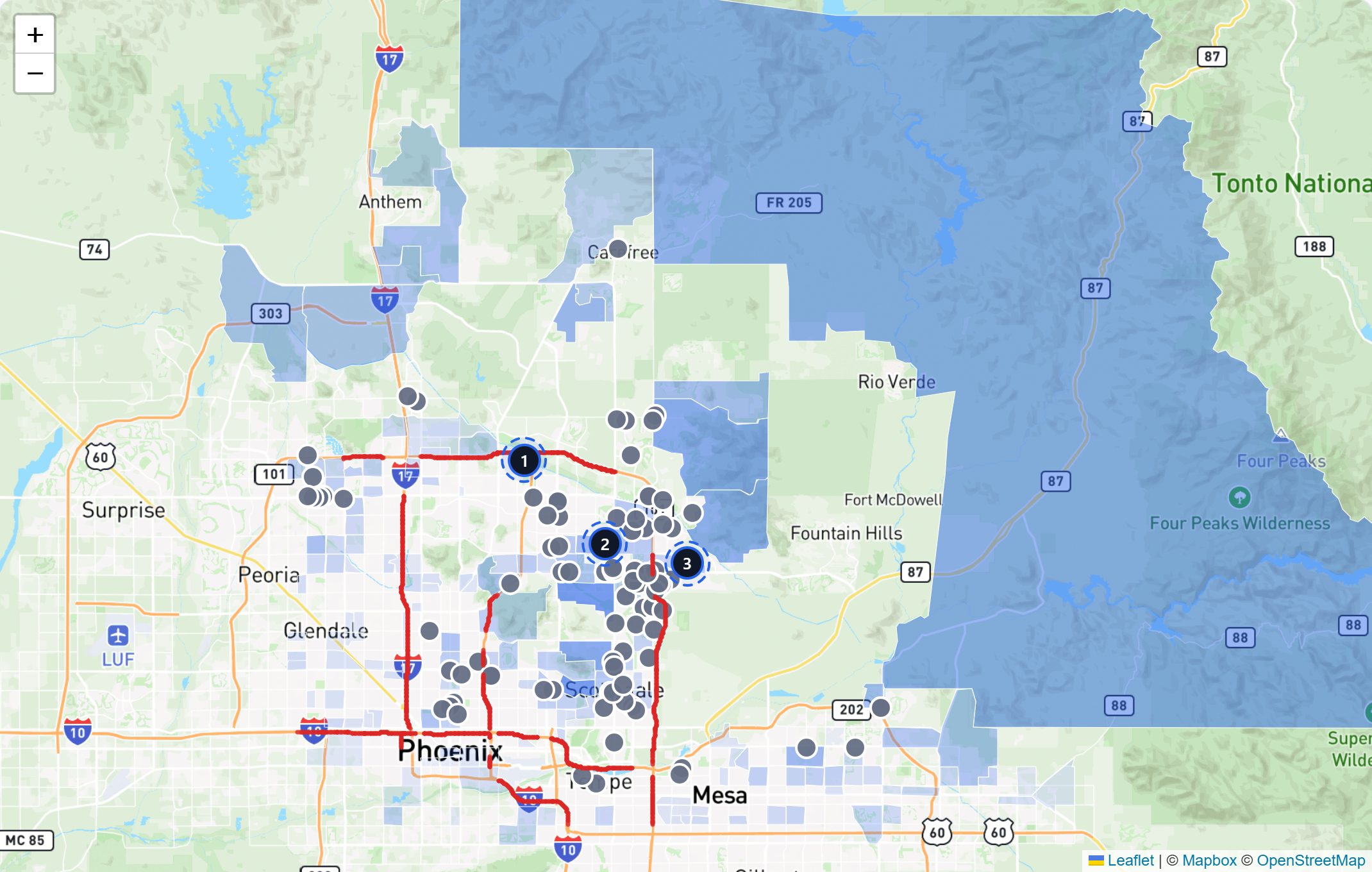
The finder looks for the neighborhood with the most demand and no competitor close by. That is where a new location or a ranked site faces the least resistance. It updates whenever the data does.
Source: Computed from the demand map and competitor pins.
What you do with it
- Choose where to open next.
- Build a site where no one competes.
- Show investors the opening on a map.
How it is built
The gap finder answers a narrower question than the map: given everything known about this metro, where would you actually put the business? It ranks neighborhoods by a composite of resident numbers, income, low poverty, distance from the nearest competitor and road traffic, weighted for how the trade being sited draws its customers.
The weighting is the part that matters. An early version used one fixed formula for every trade, which meant an orthodontics practice and a coffee shop received the same answer. They should not. A coffee shop wants footfall and a busy corridor; an orthodontist wants household income and distance from the nearest competing practice.
Picks are spaced apart so you get three genuinely different options rather than three adjacent blocks, and they are capped to a sensible distance from the centre so a wide radius cannot push a recommendation into the next city.
What it does not do
Every method has edges. These are the ones worth knowing before you lean on this.
- It suggests neighborhoods and a corridor, not addresses. Vacancy, rent, zoning and parking are your side of the work.
- Traffic-aware placement depends on the road data published for that state, which is richer in some states than others.
- It does not know what you can afford.
Common questions
Why only three suggestions?
Because a ranked list of twenty neighborhoods is not a decision aid, it is homework. Three forces the model to commit, and the map is there if you want to explore beyond them.
Does it account for the competitor I would be closest to?
Yes. Distance from the nearest existing business is part of the fit score, and each suggestion states how far away the closest competitor is.